
The Right of Public Access
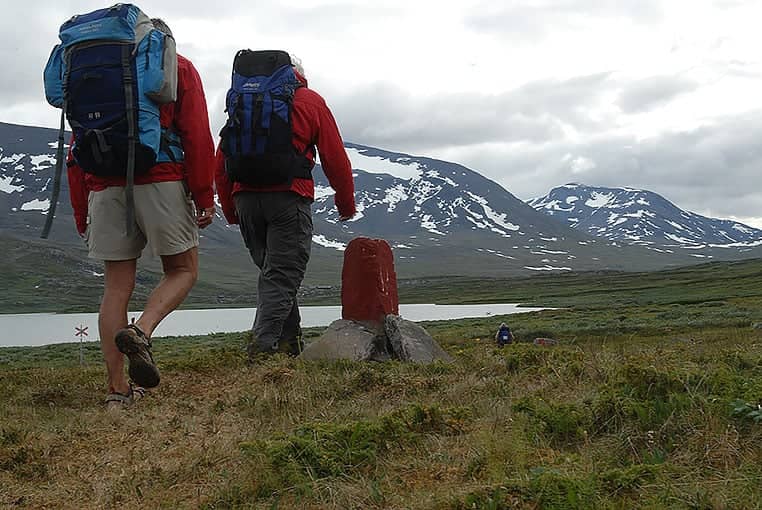
The Right of Public Access also applies in the mountains, and you are welcome to visit them and enjoy wonderful experiences. However, you must not use this right in a way that causes damage or disturbance to reindeer herding by Sami communities or to other land-based activities.
The mountain environment is sensitive, so you must take care to avoid disturbance and damage. Remember that the Right of Public Access may be partly restricted in national parks and nature reserves in the mountains. These protected areas have special regulations that explain what is allowed in each area.
Swedish Environmental Protection Agency
Sweden’s National Parks
County Administrative Boards of Sweden
Camping in the mountains
You may camp in nature for one or two nights. Make sure that you do not disturb the landowner or damage the natural environment. The Right of Public Access allows two or three tents in the same place for one or two nights.
If you are camping in a large group with many tents, you need permission from the landowner or the person responsible for managing the land. Large groups increase the risk of damage to the ground and sanitation problems.
Special rules apply in national parks and nature reserves. In general, camping is only allowed in designated places. Camping may also be prohibited throughout an entire area.
Information boards in the area often explain what is allowed. You can also contact the municipality or County Administrative Board for more information. Remember that it is your responsibility to find out which rules apply.
Cycling
Cycling in nature is a wonderful experience. The Right of Public Access allows you to cycle in natural areas and on private roads.
When cycling near a house, you must show consideration. The people who live there have the right not to be disturbed. How close you may cycle depends on the risk of disturbing them.
Places where cycling is not allowed
You must not cycle across planted areas, gardens, plant nurseries, public flower beds, forest plantations or other sensitive areas, such as fields with growing crops.
Cycling on private roads is allowed. Landowners are not allowed to put up signs that prohibit cycling. You may cycle carefully in nature. Choose your route and adjust the way you cycle so that you do not cause unnecessary damage to the ground.
Pay particular attention to the following:
- Avoid soft trails, especially during spring and autumn when the ground is wet.
- Avoid cycling across sensitive ground, such as areas covered with lichen, exposed rock with moss and lichen, soft meadows, bogs and wetlands.
- Adjust the way you cycle to the ground conditions.
- Remember that tyres with a deep tread can easily damage trails and sensitive ground.
There is no general ban on cycling on exercise trails or hiking trails. However, these trails are intended for people who are walking or running. You must therefore cycle slowly and allow walkers and runners to go first.
Regular cycling in the same place or cycling in groups
It is always a good idea to ask the landowner for permission if you plan to cycle regularly in a particular natural area. This is especially important if you organise cycling activities, or if people will cycle regularly on forest land owned by someone else.
There may be a high risk of damage, and you have a special responsibility as the organiser. You must also notify the County Administrative Board for consultation if your cycling activity could damage the land.
The municipality or the police may restrict cycling on exercise trails and hiking trails. This can be done through local traffic regulations or local public order regulations. A “No cycling” sign shows where cycling is prohibited.
It is your responsibility to find out which rules apply. Contact the municipality or the police for information.
Special rules in national parks and nature reserves
Special rules for cycling may apply in national parks and nature reserves. Cycling may be completely prohibited or only allowed on certain trails.
Information boards in the area explain what is allowed. You can also contact the municipality or County Administrative Board for more information about the rules.