
Thunderstorms in the mountains
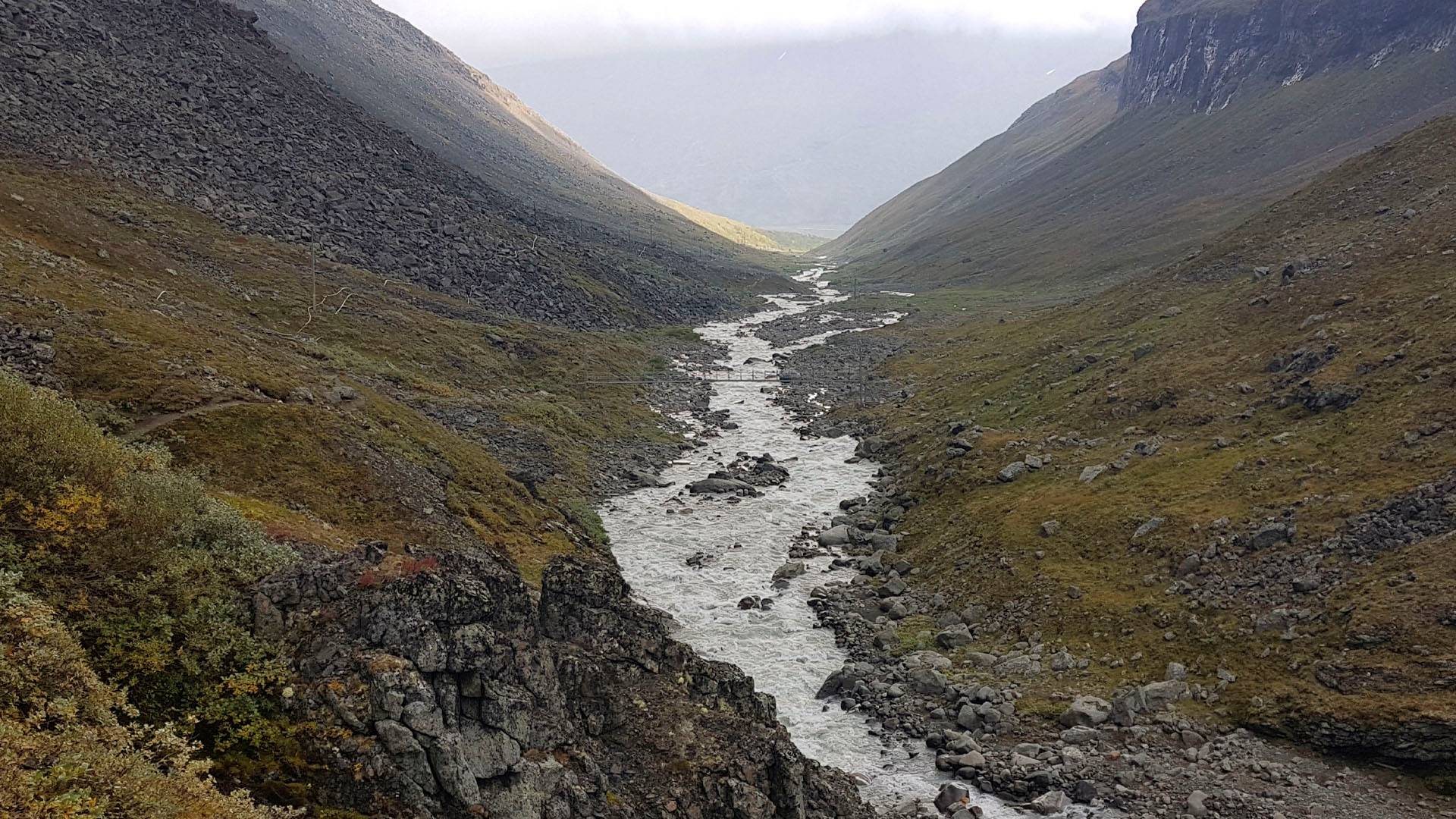
SMHI records lightning strikes, including their time, location, electrical current and polarity. Thunderstorms occur on only a few days each year in the Swedish mountains.
SMHI’s data shows where thunderstorms are most common in Sweden and when they most often occur during the year and the day.
The west coast has the highest average number of thunderstorm days each year, with 25–30 days. The Lapland mountains have the lowest number, with 1–3 days.
Thunderstorms can occur at any time of day but are most common between 4 and 5 p.m. Swedish summer time.
Thunderstorms can occur throughout the year. Over land, they are most common in July, followed by August and June.
How far away is the lightning?
Light from a lightning flash travels at 300,000 kilometres per second. The sound of thunder travels much more slowly, at about 343 metres per second at a temperature of +20°C.
Because light travels much faster than sound, you see the lightning before you hear the thunder. The first part of the thunder comes from the nearest part of the lightning strike. The last part comes from the part furthest away.
Count the seconds between seeing the lightning and hearing the thunder. Divide the number of seconds by three to estimate the distance to the lightning in kilometres.
For example:
Three seconds means that the lightning is about one kilometre away.
Six seconds means that it is about two kilometres away.
The number of lightning discharges in Sweden varies from about 100,000 to 250,000 per year. The average is about 165,000 per year.
Thunderstorms are more common in southern Sweden than in northern Sweden. The number of thunderstorm days ranges from only a few days per year in the Lapland mountains to more than 25 days on the west coast. Thunderstorms can occur at any time of day but are most common during the afternoon and evening.
How can you protect yourself?
Many people are unsure how to protect themselves and may feel frightened during a thunderstorm. Some simple advice is to go indoors or move to a place that is as low as possible. There are also other things you should remember.
Lightning usually takes the shortest path from a cloud to the ground, where there is the least resistance through the air. It therefore often strikes objects that rise above their surroundings.
This may include people or objects in large open areas, on mountains, in boats on large lakes, along shorelines and in other flat, open places. A person may be the highest point for several hundred metres and can then act as a lightning conductor.
Holding up an umbrella or fishing rod, cycling or standing in a boat while fishing during a thunderstorm also involves a risk. The risk of a lightning strike is also higher in very high places and near tall buildings or masts than in low areas.
If you are in open terrain, above the tree line or on a lake when you hear thunder and cannot reach suitable shelter, find a hollow or another low place. Crouch down, place your hands on your knees and wait for the lightning activity to decrease.
Check where the thunderstorm is
To follow the location and movement of thunderstorms, use SMHI’s lightning radar:
SMHI radar with lightning information – in Swedish