
Ice skating in the mountains
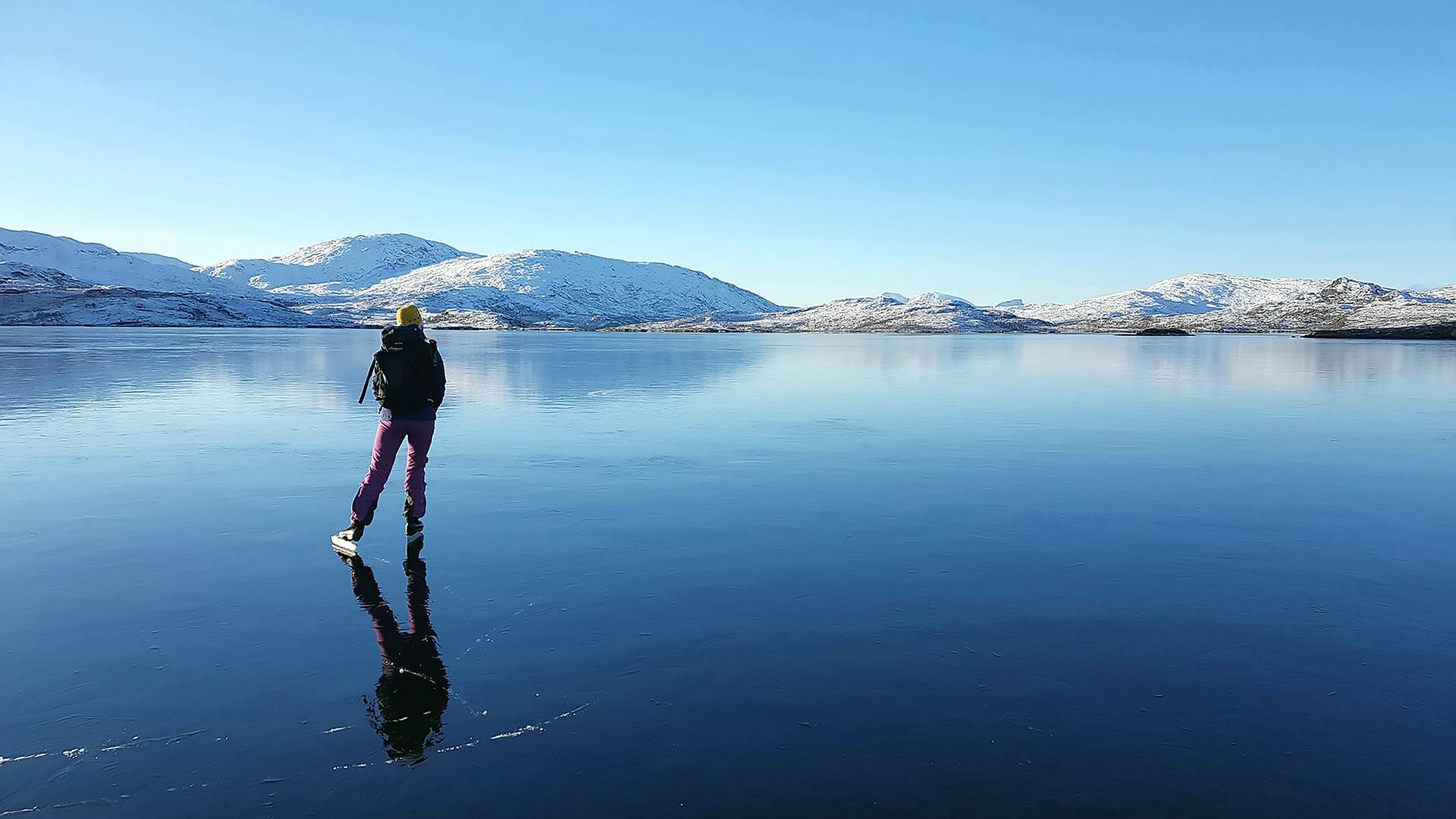
The season for long-distance ice skating is short. But when conditions are good, you can skate in mountain environments from October to December, depending on when the ice forms and whether there is little or a lot of snow on the lake ice.
Think about safety when venturing out onto the ice and bring the necessary equipment. Every year, many accidents occur where people fall through the ice.
Since the ice can be weak early in the winter, you should always make sure you are properly equipped with a rescue line, dry clothes, ice picks, and something that floats before you set off. Don’t forget to bring a good and equally knowledgeable companion on your trip.
Dangers on the ice
In certain areas, you need to be extra alert for thin ice, such as where the water underneath is moving, or where something insulates or conducts heat. Specific examples of such areas include: reeds, cracks, piers, bridges, headlands, drains, outlets, inlets, straits, shallows, and wind holes.
Ice Picks
It is important to bring ice picks onto the ice and to wear them correctly. They should sit firmly around your neck, raised high under your chin and outside your clothing. This way, they are easy to grab and won’t injure you if you fall in.
It’s also important to know how to use the ice picks. Practice with them: loosen them with your gloves on, lie down, and pull yourself forward on the ice. This will help you master the grip if things get serious.
To be able to get out using ice picks, you need:
- a sufficiently strong ice edge
- well-practiced technique, water confidence, arm strength, and some presence of mind
- safe and good flotation clothing – nowadays, there are flotation garments in the form of base layers with extreme buoyancy as well as larger overalls.
Tips for a Safer Skating Trip
The Mountain Safety Council, together with the Ice Safety Council, has developed important advice for a safer skating trip in the mountains:
- Never skate alone – it can be very difficult to get out by yourself if the ice breaks. Most serious accidents have involved solo skaters or pairs where both fell through the ice. Ideally, you should be three or more and keep your distance so that not everyone falls in if the ice breaks.
- Use an ice pole and ice picks – the ice pole works like a feeler to test the ice’s strength. The ice picks should hang around your neck near your chin so they are easy to reach quickly. Don’t forget a throw line for buddy rescue.
- Study the area where you plan to skate – bring a map and study the lake or watercourse, which can help you identify areas with weaker ice.
- Skate close to the shore – by skating near the shore, you have a shorter distance to solid ground if something happens.
- Bring dry clothes – pack a dry change of clothes in a sealed plastic bag or similar. Put the bag in a backpack, which then becomes an important flotation aid if an accident occurs.
- Leave a travel message – inform a relative of your route and when you expect to return.
- Stay calm if the ice breaks – if an accident happens and the ice breaks, it’s important to breathe calmly. Turn toward the direction you came from and work methodically with the ice picks to get out of the water onto safe ice.
- Call for help if an accident occurs – alert help via the 112 app, which automatically sends your position to SOS Alarm, making it easier for help to reach the right place quickly.
On the Ice Safety Council’s website, you can learn more about traveling on frozen lakes and waterways: